Chargeback automation for Shopify, end to end

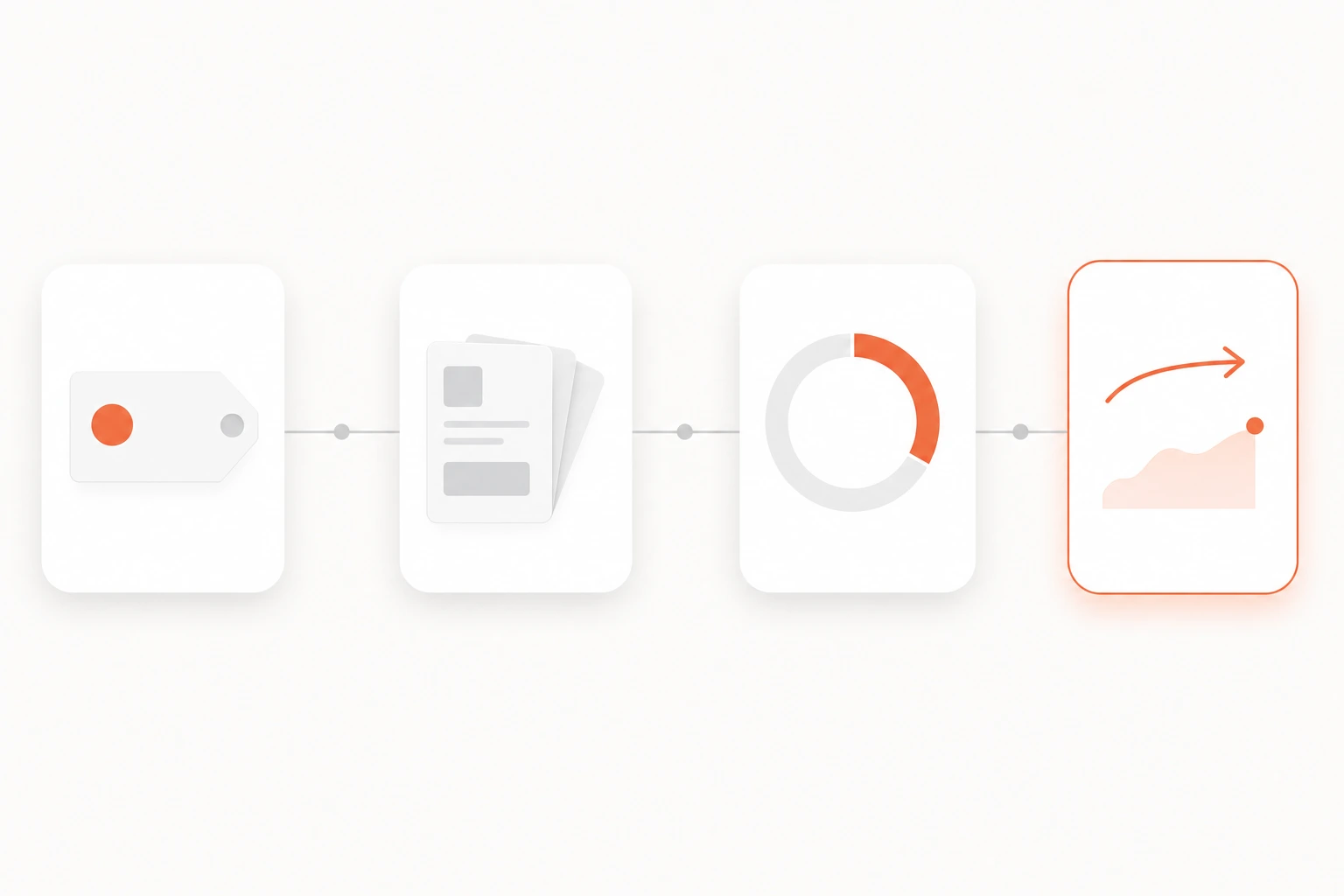
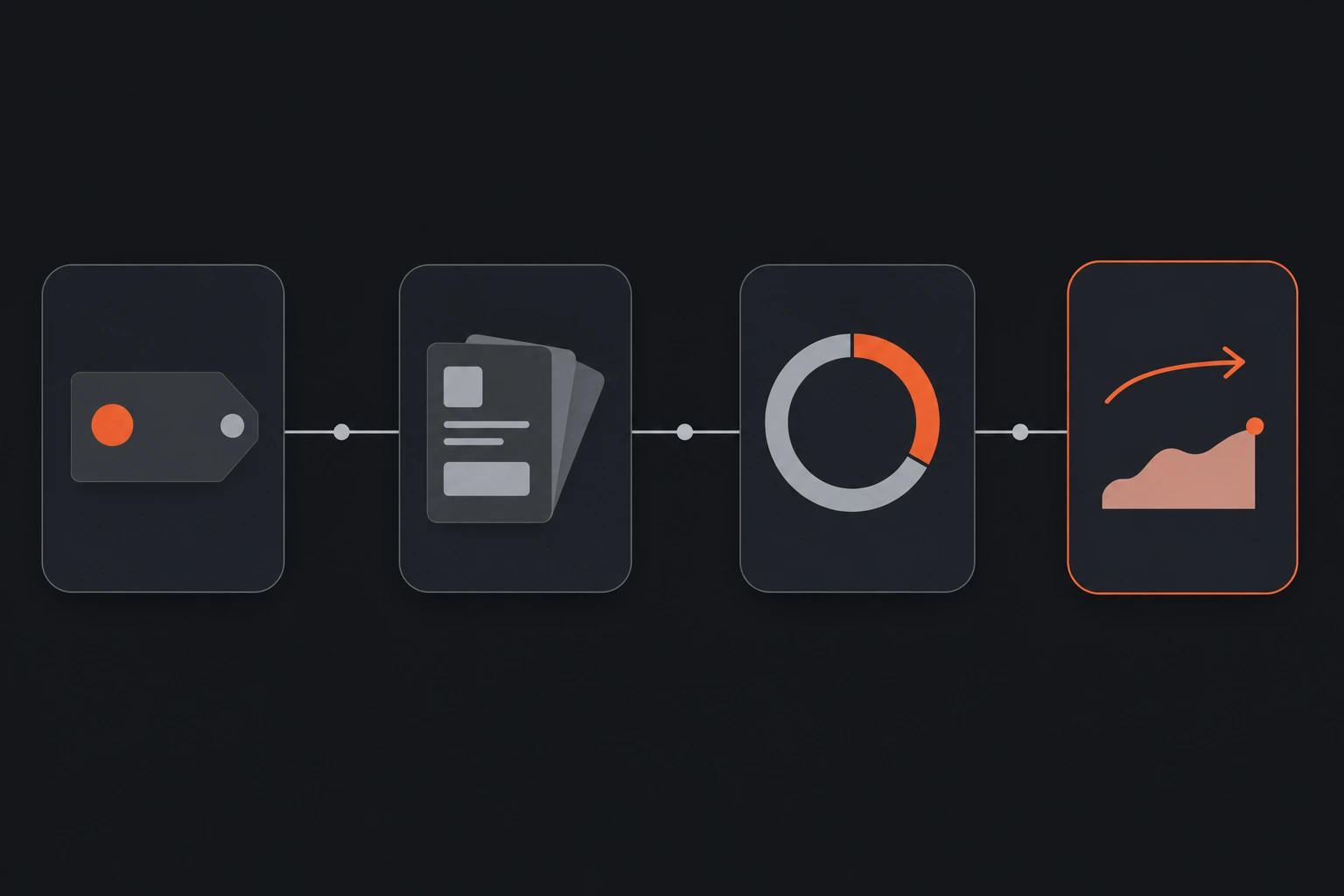
A chargeback for $178 landed under reason code 10.4, fraudulent. Inside a minute, an automated system had pulled two prior orders on the same card, both undisputed, one 140 days out and one 210, matched them against Visa's Compelling Evidence 3.0 test, and staged a submission four days ahead of the due date.
Nobody had to remember that 10.4 means something different from a not-received claim and needs different evidence. Nobody had to go find the AVS result by hand. That part is real, and it is the part every vendor's homepage shows you.
What the homepage does not show: someone still had to make sure the AVS result was accurate before the order shipped, and someone still had to check, three weeks later, that the case actually won. Automation moved the work. It did not delete it, and it is one lever inside chargeback management, not a substitute for the process.
What chargeback automation actually does
Strip away the branding and every automated chargeback tool, whether it is built into your payment processor or sold as a separate Shopify app, does some version of the same four things. The differences between vendors are in how well each step is done, not in whether the steps exist.
Pull the reason code
The system reads the incoming dispute and the network's own label for what the cardholder is claiming. 13.1, 13.2, 13.3, and 10.4 allege four different things, and a packet built for one does nothing for another.
Match evidence to that specific allegation
Not a generic bundle of order confirmations and screenshots. Carrier tracking for a not-received claim, subscription terms for a cancelled-recurring claim, AVS and prior-order history for a card-absent fraud claim.
Track the deadline for that one dispute
Shopify's own admin shows a due date that runs 7 to 21 days after filing, and it varies dispute by dispute (Shopify Help Center, checked July 22, 2026). A queue of open cases with different clocks is exactly the kind of thing software tracks better than a shared inbox does.
Submit before it lapses
Stripe's Smart Disputes will submit the pre-filled packet automatically just before a dispute times out if nobody has acted on it, precisely so a missed deadline is not how a winnable case gets lost (Stripe documentation, checked July 22, 2026).
Shopify already automates a slice of the first two steps for merchants on Shopify Payments: its admin auto-populates available order data, shipping information, order dates, and customer IP address into a dispute response, and adds AI-generated insights for product-not-received cases specifically (Shopify Help Center, checked July 22, 2026). A dedicated automation tool goes further, reaching into fulfillment, carrier, and communication data that Shopify's own dispute form does not pull in on its own. Chargeflow, for one, describes syncing shipping and fulfillment data from over a thousand carriers plus customer communications the moment a dispute is detected (chargeflow.io, checked July 22, 2026). The mechanism is the same idea Shopify already ships in miniature. The scope is bigger.
Evidence by reason code, the automated match
The reason code is the whole game. Which evidence answers which allegation does not change because a machine assembled it, and neither does the fact that some of it still has to come from a person.
| Reason code | Allegation | What automation typically pulls on its own | What still needs a person |
|---|---|---|---|
13.1 | Merchandise not received | Carrier tracking status, delivery address match, signature scan where the carrier captured one | Confirming the shipping address on file was actually correct, chasing a carrier whose tracking has gone stale |
13.2 | Cancelled recurring transaction | Subscription terms and renewal date, if that data lives in the store's own system | Checking whether a cancellation request sat unactioned in a support inbox that isn't wired into the tool |
13.3 | Not as described or defective | Product copy and images as of the purchase date, if versioned | Reading the actual support thread and judging whether the complaint holds up |
10.4 | Fraud, card not present | AVS and CVV results, prior undisputed transactions on the same card for the Compelling Evidence 3.0 match | Confirming the account's own history is genuine rather than a pattern built across several stolen cards |
Two of those rows lean heavily automated. The other two still run through a person, because the evidence lives in a support thread or a judgment call, not a data field.
Automated chargeback management without giving up 20% of recoveries
Assembling this evidence automatically is not a differentiator anymore. It is close to table stakes for anyone selling representment in 2026. The differentiator is what it costs you to have it done.
Most of the market prices automated chargeback management as a percentage of what it recovers. Chargeflow publishes 25% per recovered chargeback on its pricing page. Disputifier publishes 20% of recovered revenue, capped at $250 per won case (both checked July 22, 2026). Win that $178 dispute at a 25% share and $44.50 of it never reaches your account. The automation did real work. So did the invoice.
Reclaim runs the same four steps at $0: no install fee, no success fee, and the merchant keeps everything recovered. What makes it possible to price it that way is where the evidence comes from. Redo already sits on a Shopify store's returns, support conversations, order edits, and fulfillment records for reasons that have nothing to do with disputes. When a chargeback lands, that same post-purchase data is already there to strengthen the packet, rather than needing a separate integration built and sold as a feature. A 13.1 packet that can cite a support ticket where the customer later confirmed delivery, or a 13.2 packet that can show an order edit rather than a cancellation, is a stronger packet than tracking numbers alone, and it is data Redo already has for other reasons.
The honest part: automation moves the work, it does not delete it
Automated chargeback management is a real description of what these systems do, and it is also a phrase that implies more hands-off operation than the reality. Someone still has to get the upstream data right: the fulfillment record has to show the correct address, the subscription terms have to actually be stored somewhere the system can read, the support thread has to be logged in a place the tool can see it. Automation cannot match evidence that was never captured.
Someone still has to read outcomes, too. Stripe is explicit that not every dispute qualifies for automatic submission, weighing the reason code, the payment method, and whether relevant evidence exists at all (Stripe documentation, checked July 22, 2026). The cases a system declines to auto-submit are the ones that land back on a person, and a store that never checks which cases those were will not notice a pattern, like an entire reason code the tool consistently can't touch, until it shows up as a run of quiet losses.
And winning does not mean the work stops mattering elsewhere. A representment win recovers the money. It does nothing for the dispute ratio your acquirer is actually watching, because that count is set the day the chargeback is filed, not the day it is resolved. Automating recovery faster does not touch prevention or deflection, the two things that do move that number.
Frequently asked questions
What does chargeback automation actually do?
It reads the reason code on an incoming dispute, assembles the evidence that specifically answers that allegation (carrier tracking for a not-received claim, subscription terms for a cancelled-recurring claim, AVS and prior-order data for card-absent fraud), tracks the deadline for that individual dispute, and submits before it lapses. The mechanics are the same across vendors; the coverage and data sources differ.
What is automated chargeback management?
The umbrella term for software that runs the full representment loop, detection, evidence matching, deadline tracking, and submission, without a person doing each step by hand. It still depends on a person supplying accurate upstream data (policy, tracking, fulfillment records) and periodically checking outcomes, since automation only assembles what already exists.
Does automating chargeback evidence mean I can stop checking outcomes?
No. Not every dispute qualifies for automatic submission, and the ones a system declines to handle land back on a person. Sample your automated wins and losses periodically, particularly by reason code, so a data gap in one category doesn't turn into a quiet run of losses.
Does automated chargeback management have to cost a percentage of recoveries?
No. Chargeflow charges 25% per recovered chargeback and Disputifier charges 20% capped at $250 per case (both checked July 22, 2026), but Reclaim runs the same evidence-matching and submission automation at $0, with no install fee and no success fee.
The check to run before you trust an automated packet
Pull the last quarter of disputes that went through automation, whether that is Shopify's own auto-populated response, a processor's built-in tool, or a dedicated app, and sort the losses by reason code rather than looking at the overall win rate.
If losses cluster in one code, that is usually a data gap upstream, not a weak argument: subscription terms that live in a spreadsheet instead of the store, a support thread the tool never saw, tracking that updates a day too late. Fix where that evidence lives before you fix the packet, because a smarter template cannot compensate for a fact the system was never shown.