Chargeback vs dispute, and why it changes things


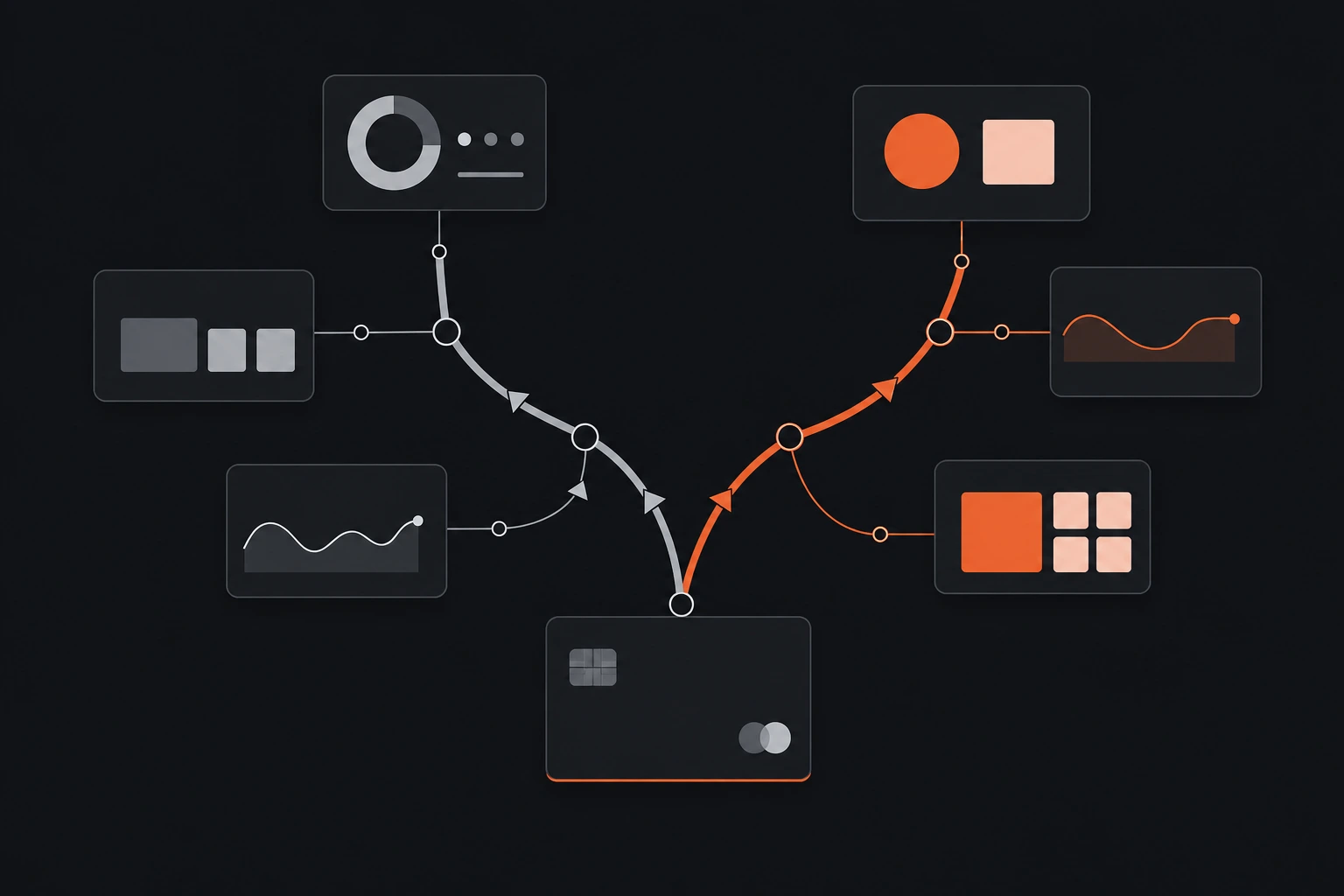
"Chargeback" and "dispute" are not two names for the same thing, even though your Stripe and Shopify dashboards use them as if they were. A dispute is the umbrella term for the whole process a cardholder starts when they question a charge with their bank. A chargeback is one specific stage inside it: the forced reversal where the money is already gone. Between the two sits an inquiry, a question you can often answer before any funds move.
Which of those words you are actually looking at decides what you should do and how much time you have. So it is worth pulling them apart.
Is a dispute the same as a chargeback?
No, but the tools you use talk as if it were, which is where the confusion starts. Stripe's own documentation opens with "a dispute (also known as a chargeback) occurs when a cardholder questions your payment with their card issuer" and files everything under a single Disputes tab (checked 2026-08-10). Shopify does the same, using "dispute" as the umbrella for both inquiries and chargebacks in your admin, reports, and notifications.
The cleaner way to hold it: a dispute is the category, and a chargeback is the most severe outcome inside that category. Every chargeback is a dispute. Not every dispute is a chargeback. I define the reversal itself in depth in what a chargeback is, so I will not repeat it here. The point for this piece is that the word "dispute" on its own does not tell you whether your money has left your account.
What is a payment dispute?
A payment dispute is the entire process that begins when a cardholder contacts their issuing bank to question a transaction instead of contacting you. The issuer reviews the complaint and can go a few directions: reject the claim outright, open an inquiry asking for more information, or file a chargeback that reverses the funds.
"Dispute" names all of that. That is why Stripe and Shopify put every stage under one label. It is convenient for their interface and unhelpful for your decision, because the label is the same whether the issuer is still asking a question or has already pulled the money.
So when a "dispute" notification lands, the first job is not to react to the word. It is to work out which stage of the process you are actually at.
What is a retrieval request or inquiry?
An inquiry, historically called a retrieval request, is a request for information about a transaction. No funds have moved and no fee has been charged. Shopify states it plainly: on an inquiry the bank does not take the disputed amount or a fee right away (checked 2026-08-10). It is a question, not a reversal. Answer it well and it can end there. Ignore it, or answer it badly, and it can escalate into a chargeback you then have to fight.
The phrase "retrieval request" is the older one, and it causes some of the muddle by itself. Visa retired the formal retrieval request in October 2020 and replaced it with a real-time inquiry product, Order Insight (checked 2026-08-10). Mastercard and various processors still use the term. So the same basic thing, a question with your money still in your account, reaches you as a "retrieval request," an "inquiry," a "request for information," or a "pre-dispute," depending on who is telling you about it.
The distinction that matters for a chargeback vs inquiry comparison is the count. An inquiry is not on your dispute ratio yet. A chargeback is, and it stays there whether you later win the representment or not.
Here is the whole set in one place.
| Term | What it means | Have funds moved? | What you should do |
|---|---|---|---|
| Dispute | Umbrella term for the process, used by Stripe and Shopify for everything below it | Depends on the stage | Open it and find out which stage you are actually at |
| Inquiry / retrieval request | A request for transaction information, before any chargeback | No, not yet, and no fee | Answer with order and delivery detail inside the window, and resolve it before it escalates |
| Chargeback | Forced reversal of the transaction | Yes, already pulled, plus a fee | Decide representment or concede before the response deadline |
How should a merchant handle each?
Each stage has one correct move, and they are not interchangeable.
An inquiry is the cheapest place to act, so act there. Answer it with the order record, the billing descriptor, and delivery confirmation, inside whatever window the notice gives you. A clear answer can close it before it becomes anything. The same window is where deflection lives: when a real cardholder has already gone to their bank, an early network signal can reach you before the chargeback is formally filed, and a refund or a clear response inside the window can stop the filing. That is the mechanic I walk through in respond to a pre-chargeback alert, and it is what deflecting a dispute before it is filed is for.
A chargeback is already a reversal, so the cheap options are gone. The money and the fee have left your balance. Your only moves now are representment, submitting evidence that answers the specific reason code, or conceding. Both are on a deadline, usually 7 to 21 days from your processor. The method is in chargeback representment, and Reclaim is the part of our suite that handles it.
The reason the order matters: an inquiry you resolve never enters your ratio, and a chargeback you win still does. You are not just saving the order value by acting early. You are keeping the count off the number your acquirer watches.
Where the terms genuinely blur
I want to be honest that the vocabulary is inconsistent, and no article fixes that.
Stripe calls a chargeback a "dispute." Shopify files inquiries and chargebacks together under "dispute." "Retrieval request" is a term Visa dropped years ago that still shows up on notices. Two processors can hand you the same event under two different words, and a single processor can use one word for two different events. You cannot trust the label alone.
The one reliable signal is money movement. Ignore what the notice calls itself and check whether the disputed amount has actually left your balance and whether a fee was charged. That field is the truth the word is standing in for.
One more caveat on the ratio. Keeping an inquiry from becoming a chargeback is the reliable way to keep it off your count, but whether a resolved pre-dispute is excluded can depend on the timing of the network's data extract, so confirm with your acquirer how they treat it rather than assuming it always stays off.
Frequently asked questions
Is a dispute the same as a chargeback?
No. A dispute is the umbrella term for the whole process a cardholder starts with their bank, and a chargeback is the specific stage where the funds are reversed. Every chargeback is a dispute, but a dispute can also be an inquiry where no money has moved yet. Stripe and Shopify label both 'disputes,' which is why the terms blur.
What is the difference between a chargeback and an inquiry?
An inquiry, sometimes called a retrieval request, is a request for information with no funds moved and no fee charged. A chargeback is a forced reversal where the money is already pulled and a fee is added, and it counts toward your dispute ratio whether you win it back or not.
Is a retrieval request the same as a chargeback?
No. A retrieval request is a pre-chargeback request for documentation, with no money moved. Visa retired the formal retrieval request in October 2020 and replaced it with a real-time inquiry product, though the term persists on other networks (checked 2026-08-10). A chargeback moves the money; a retrieval request does not.
Why does Stripe call chargebacks disputes?
Stripe uses 'dispute' as its umbrella label and states that 'a dispute (also known as a chargeback)' occurs when a cardholder questions a payment (checked 2026-08-10). The dashboard word will not tell you whether funds have moved. Check the balance and the fee for that.
The check I would run when a notice lands: ignore the word your processor used and look at two fields, whether the disputed amount has left your balance and whether a fee was charged. If neither has, you are looking at an inquiry, and the cheap move is still on the table. If both have, it is a chargeback, the representment clock is already running, and the only question left is whether the evidence is worth assembling.