How chargeback alerts work, and what they miss

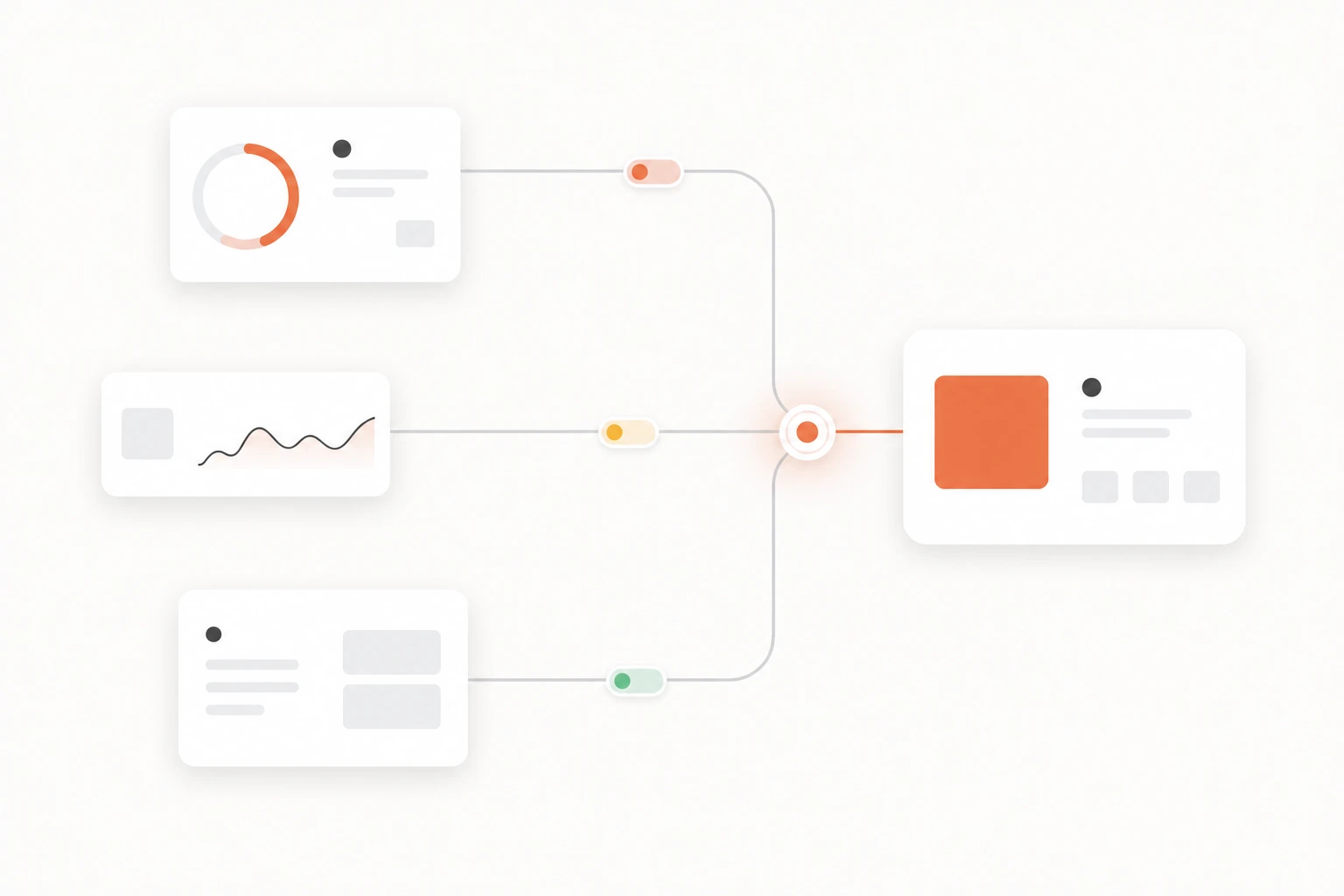
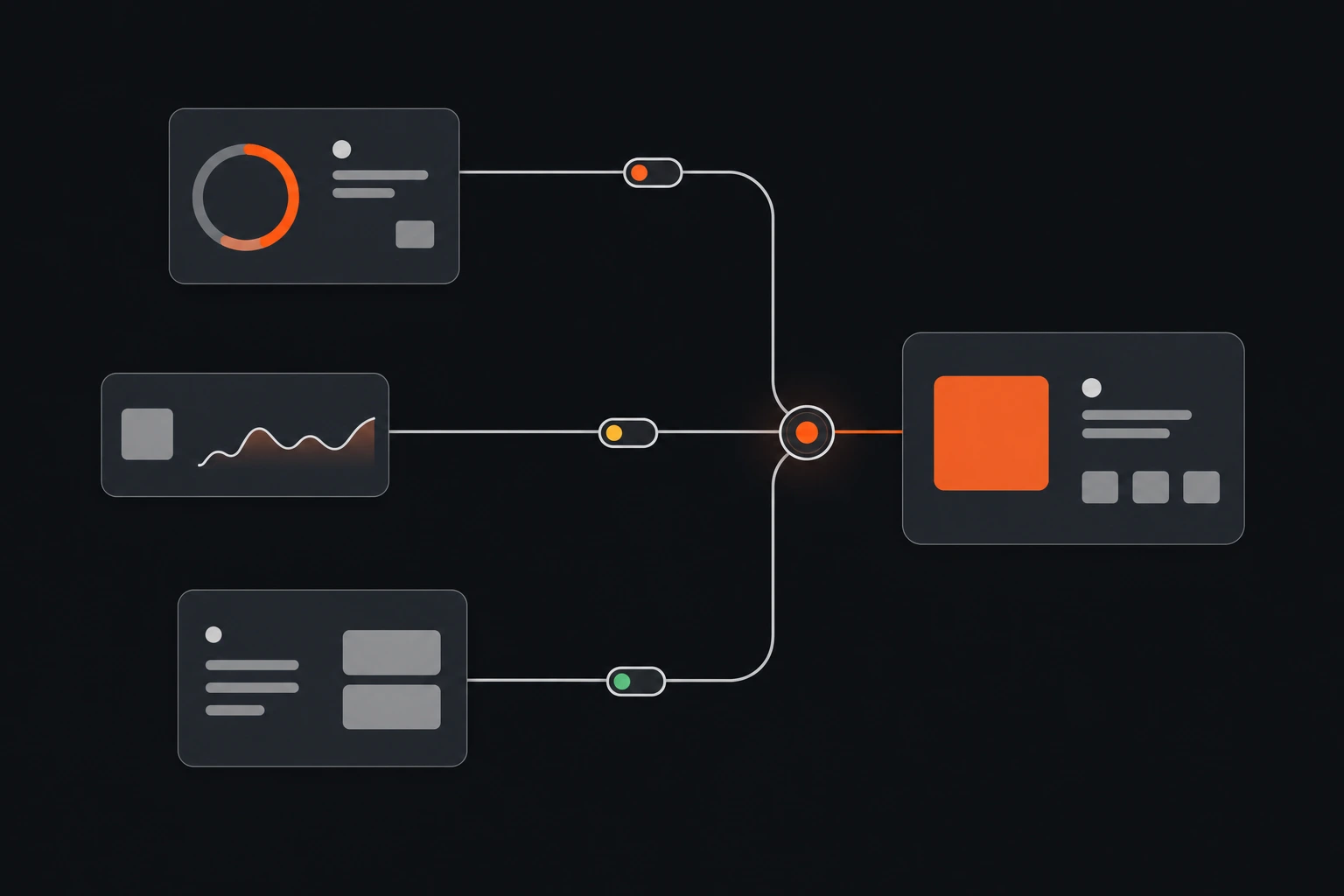
An alert arrives with an order ID, an amount, a reason category, and a clock. Not a risk score, not a probability. One specific order that one specific customer has already called their bank about.
That last part is what people get wrong about this category. An alert is not a warning that something might go bad. It is confirmation that it already has.
The sequence, end to end
A cardholder looks at their statement, does not recognise a charge or decides an order is not coming, and contacts their issuing bank.
Normally the next step is a chargeback. The issuer files, your acquirer debits you, a fee lands, and you have a deadline to assemble evidence.
Alert networks insert a step before that. If the issuer participates, the dispute is held briefly and the details are pushed out instead of filed. Ethoca describes sending "near real-time alerts that arrive within hours" rather than weeks later through the chargeback process. Verifi describes CDRN cases as paused and posted for the merchant, with 72 hours to act.
You then decide. Refund and the issuer closes the case without filing. Do nothing, the pause expires, and the chargeback proceeds as it would have.
That is the entire mechanism: a short, structured window to pay someone before their bank makes you.
The three networks, side by side
"The sequence" above is the general mechanism. A Shopify merchant actually meets three specific implementations of it, and they resolve, route, and window differently enough that lumping them together is how the limits below get missed.
| Network | What it does | Action window | Stays off the VAMP ratio? |
|---|---|---|---|
| Visa RDR | Auto-refund on rules you set in advance, no login required | No per-case window, the rule fires instantly | Yes, for Visa transactions, subject to the data extract timing Visa notes |
| Verifi CDRN | Alert-to-act, the paused dispute is posted for your team to review | 72 hours to initiate the credit | Yes, same Visa-only scope, same timing caveat |
| Ethoca | Alert-to-act, Mastercard posts the dispute and expects a logged outcome | No fixed deadline published; Mastercard's own guidance is a final outcome within 24 hours | Only if the card is Visa, uncommon on Ethoca; the far more typical Mastercard case was never in Visa's ratio to begin with |
RDR and CDRN are both Verifi's, both owned by Visa, and get treated as interchangeable. They are not: one resolves the case before you see it, the other puts a countdown on your support desk. I go through where that bites in RDR versus CDRN. Ethoca sits inside Mastercard rather than Visa, a coverage question more than a vendor preference, covered in Ethoca versus Verifi.
Four things must be true before one reaches you
Vendor pages tend to describe alerts as though they arrive for every dispute. Here is what actually has to line up.
The cardholder's issuer participates. The binding constraint, decided bank by bank rather than brand by brand. A large national issuer can be in the network for fraud alerts and out for customer disputes, regional banks participate unevenly, and US participation looks nothing like Europe or Latin America. Nobody can tell you your coverage rate before you run it, because it depends on where your customers bank.
The dispute goes through the bank, not around it. A customer who emails you, opens a PayPal case, or calls their card's own app-based resolution flow may never generate a network signal at all.
Your merchant identifiers are matched. Signals are keyed to acquirer identifiers. If your descriptors and BIN or CAID registration are wrong or incomplete, the alert cannot find you. Merchants on shared BINs through aggregating acquirers hit real limits here, and for Visa's Rapid Dispute Resolution specifically, a shared BIN can block enrolment entirely.
Somebody acts inside the window. The pause is short. An alert that arrives on a Friday and gets read on Monday is an alert you paid for and a chargeback you also received.
Miss any one and the dispute files exactly as it would have without a subscription.
What you actually do when one arrives
The default action is refund the order in full. Not a partial credit, not a replacement, not a conversation. The networks are built around a credit closing the case.
That constraint surprises operators the first time. You cannot respond to an alert with "we shipped this, here is the tracking." Evidence is the representment tool. Alerts are a payment tool.
The economics per alert look like this: you give up the order value plus whatever the alert costs, and you avoid a chargeback fee of $15 to $25 or more, 20 to 45 minutes of evidence work, and one event in your dispute ratio.
On a $200 order that trade is usually clear. On a $28 order it often is not, because the refunded principal plus the alert fee can exceed the fee you were avoiding. Which is why any serious deflection setup runs on rules rather than reflexes: auto-resolve below a value threshold, route high-value orders to a human, decline categories where you consistently win representment.
This is the part Redo's pre-filing deflection is built around. The network integrations are licensed from Disputely rather than built in-house, and I would rather say that plainly than imply we run the plumbing. The work we do sits above it: matching the signal to the Shopify order, executing the refund, applying value and reason-code rules, and de-duplicating when the same dispute surfaces on more than one feed.
Recovering the money is not why alerts exist. Representment already does that. Alerts exist because of the count.
Visa's VAMP fact sheet excludes disputes resolved through pre-dispute solutions from the ratio, contingent on the timing of the data extract. It does not exclude disputes you won. Verifi says the same from its side: disputes resolved before a chargeback initiates do not count against Visa's dispute ratio.
That is the whole reason to pay for this, and it is the one thing representment cannot do at any price. The consequence of skipping it is in why winning a chargeback does not fix your dispute ratio.
The honest part, and what alerts cannot catch
This category oversells harder than any other I work in, so let me be blunt about the limits.
Disputes from non-participating issuers never arrive. The largest gap, and unmeasurable before you run it. Coverage varies by issuer, region, card brand, and integration. Anyone quoting a network-wide prevention rate is quoting somebody else's customer base. Ask which portfolio and over what period, then treat the answer as an anecdote.
Disputes already filed are out of scope. If the chargeback beat the signal, there is no window. You are in representment.
Non-card disputes sit outside entirely. PayPal claims, Shop Pay disputes, and ACH returns are not on these networks.
You pay on cases that would have evaporated. Some cardholders abandon disputes and some issuers resolve them without filing. You refund those too, and you never learn which they were, so you cannot compute what you wasted. Same for chargebacks you would have won on strong evidence.
The ratio benefit is real and conditional. Both Visa exclusions are contingent on data extract timing, so a deflection close to month end may still land in that month's numerator. Plan for the exclusion to hold over a quarter, not per case.
It does not touch the cause. An alert tells you a customer disputed. It does not tell you your descriptor reads as a random corporate string, that your shipping estimates are optimistic, or that your renewal email goes to spam. If a third of your disputes are confusion rather than fraud, fixing the descriptor and the delivery emails is cheaper, permanent, and reduces the numerator at the source. That is what Resolve is for, and no alert subscription substitutes for it.
If your ratio is genuinely close to a threshold, deflection is worth the conversation. Alerts is priced per alert, $15 for Visa RDR and CDRN and $24 for Ethoca, with volume tiers published. Signup runs through a demo. The Alerts page has the detail and the request form.
Frequently asked questions
Do I need RDR, CDRN, and Ethoca all at once, or does one cover me?
Depends on your card mix. RDR only reaches Visa, and only issuers who participate in it. CDRN adds non-Visa coverage but hands you a 72 hour clock instead of an automatic resolution. Ethoca sits inside Mastercard and reaches a different set of issuers entirely. Most merchants with volume spread across brands end up running more than one, because none of the three is a superset of the others.
Does a dispute deflected through an alert still count against my VAMP ratio?
No, usually not. Visa's VAMP fact sheet excludes disputes resolved through pre-dispute solutions from the ratio, contingent on the timing of the data extract. Plan on that exclusion holding over a quarter rather than for any single case close to month end.
What happens if the same dispute triggers more than one network?
It happens more often than vendors admit. Verifi notes that issuers can use CDRN and RDR together, and a Visa transaction can separately raise an Ethoca signal. Without de-duplication keyed to the order, you pay an alert fee twice and risk refunding the same order twice.
Is Alerts free to use?
No. Alerts is priced per alert, $15 for Visa RDR and CDRN and $24 for Ethoca at entry volume, with published volume tiers below that, and signup runs through a demo rather than a self-serve flow. The economics work out because you are trading a chargeback fee, evidence labor, and a ratio entry for the refunded order value and the alert fee, not because the service itself has no cost.
The test to run first
Before you price a single alert, take last quarter's disputes and answer two questions.
What share are non-fraud reason codes, and what share sit on issuers you could plausibly reach? The first tells you how much of your problem is confusion rather than fraud, which is prevention work, not deflection work. The second is the ceiling on what any alert product can do for you.
Then look at your ratio against the threshold for your region. If you have headroom, fight the disputes and fix the causes. If you do not, deflection is the only lever that touches the count, and you should buy it knowing exactly what it cannot do.