What the post-purchase experience is

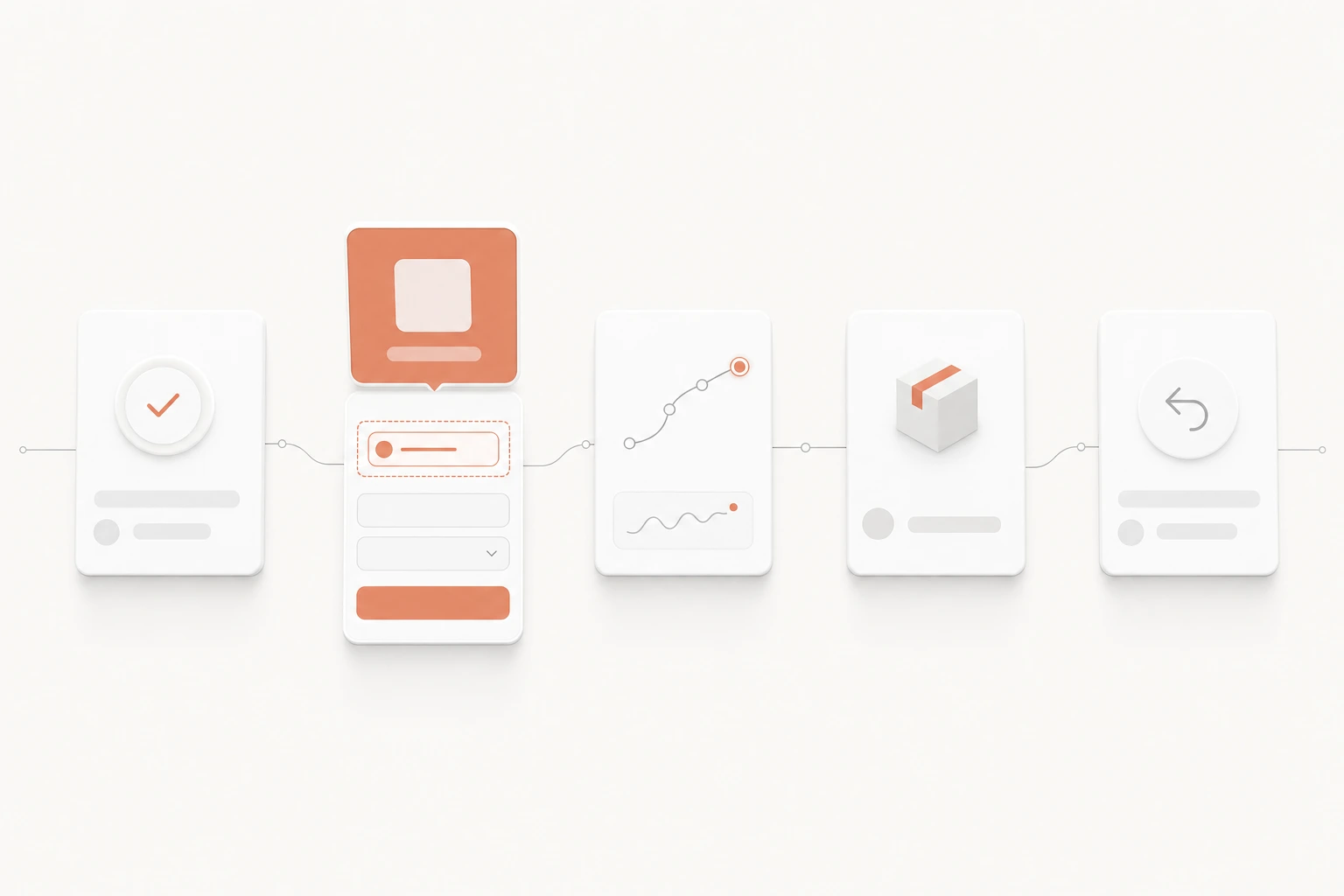
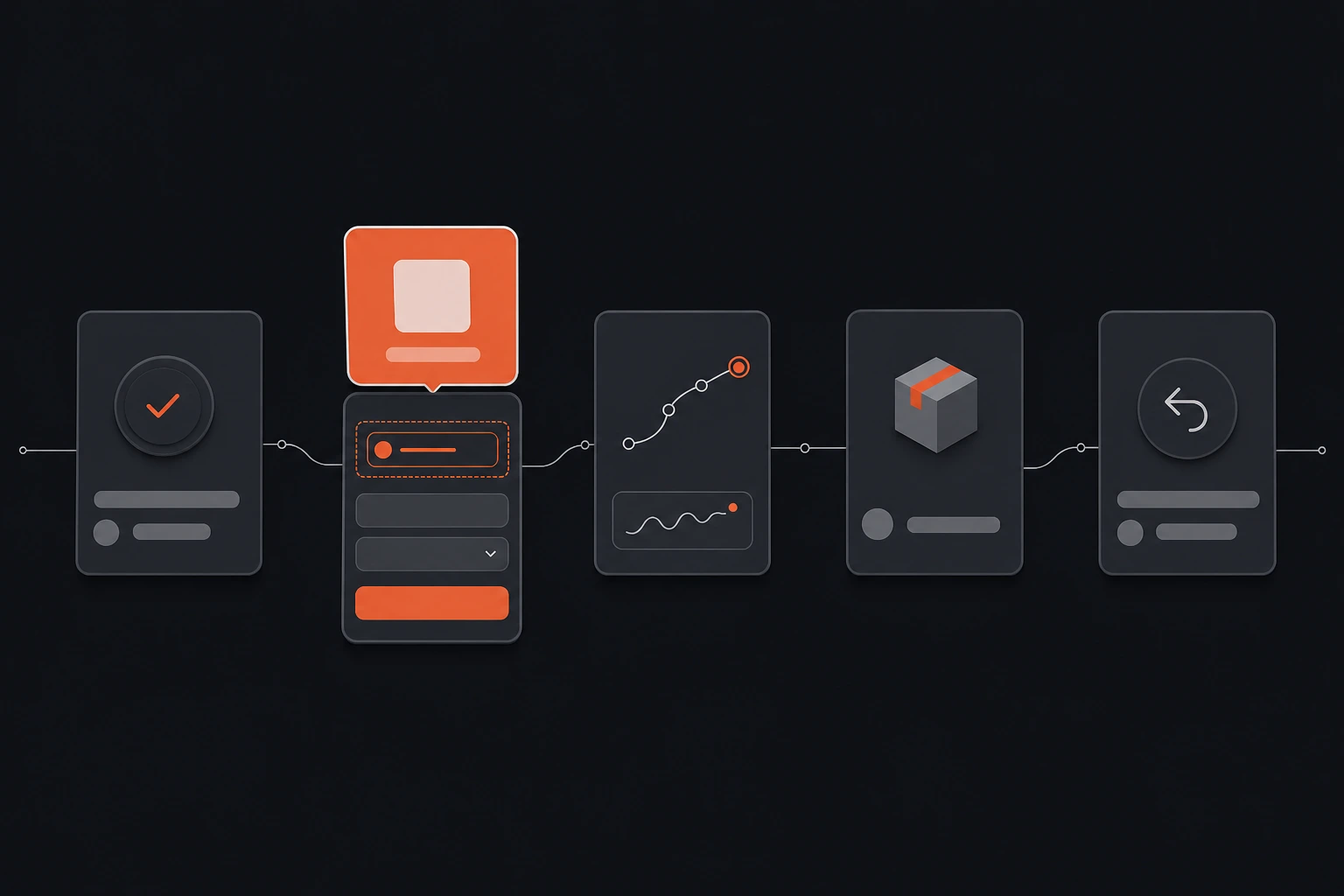
The post-purchase experience is everything that happens between "order placed" and "package kept." The confirmation, the chance to fix a mistake, the tracking, the delivery, and the return or exchange if it comes to that. It is the longest stretch of the relationship and, on most Shopify stores, the least designed.
Here is the pattern I see. A brand spends two years tuning ad creative and a checkout that converts, then hands the customer off to a stock confirmation email and a carrier link. The money went into getting the order, almost none into the two weeks after.
What is the post-purchase experience?
It is the set of moments a customer moves through once they have paid and before the order is settled in their mind. Five stages, in order:
- The confirmation. Did the order go through, is it correct, and does the charge on the statement look like your brand?
- Editing and changes. The customer notices a wrong address, a wrong size, or a second item they meant to add, and wants to fix it before it ships.
- Tracking. Where is the order right now, and when does it arrive?
- Delivery. The package shows up, on time, at the right door, in one piece.
- Returns and exchanges. If the product is wrong, how painful is it to swap or send back?
Acquisition and checkout get treated as the whole funnel. They are the front half. This is the back half, and it is where repeat purchases are won or quietly lost.
Why Shopify brands under-invest in it
Because the front half is legible and the back half is not.
Checkout has a conversion rate you can watch move. You A/B test a button, you see the number change, you feel the ROI. The post-purchase experience produces no such dashboard. Its failures show up somewhere else: in the support inbox, in a one-star review about shipping, in a customer who never comes back.
So the work gets deferred. The confirmation email stays on the default template. Order changes get handled by whoever is on support that day. Tracking is "click the carrier link." None of it is broken enough to be an emergency, and all of it is leaking.
Where the post-purchase experience breaks, stage by stage
Each stage has a predictable failure and a fix that is mostly operational, not magical.
| Stage | What breaks | The fix |
|---|---|---|
| Confirmation | Wrong details slip through; the statement descriptor is unrecognizable | A clear receipt, an editable window, a billing descriptor that reads as your brand |
| Editing and changes | The customer emails to change an address or item and waits in a queue | Self-service edits before the order is fulfilled |
| Tracking | "Where is my order" with no proactive updates | Branded tracking and automatic status notifications |
| Delivery | The package is late or lost and the customer blames you, not the carrier | Proactive delay messaging and a clear claims path |
| Returns and exchanges | A manual, refund-only process that hands back the revenue | Self-service returns with exchanges offered first |
Read the middle column top to bottom. Every one of those failures ends the same way: the customer contacts you, or they contact their bank. That is the entire game.
Self-service order editing is the pillar you actually control
Most of that table depends on your carrier, your warehouse, or your product. One row does not. Whether a customer can fix their own order after checkout is a choice you make, and it is the highest-leverage one on the list.
The reason is timing. A customer who spots a wrong address ten minutes after ordering does not want a refund or a support agent. They want to change one field before the label prints. When the only path is an email, you have turned a two-second self-service edit into a ticket, a reply, a warehouse interception, and an anxious customer in the meantime.
This is what self-service order editing is for: the customer changes the address, swaps the size, or adds the item themselves, inside the window before fulfillment, and no one on your team touches it. Order Editing is free to install, which is a deliberate choice on our side, because the ticket it prevents costs both of us more than the feature does.
The edits that matter most are the ones that otherwise become a "product not received" or "wrong item" problem later. Fixing the address before it ships is cheaper than fighting a product not received chargeback on Shopify after it does not arrive.
How a better post-purchase experience reduces support tickets
Two questions dominate most ecommerce support queues: "where is my order" and "can I change my order." Answer both without a human and you have removed the bulk of the volume.
WISMO is the big one. Where-is-my-order tickets are pure information retrieval. The customer is not upset, they are uninformed, and every one of those tickets is a status update you failed to push before they had to ask. Proactive shipping notifications and a real order status page turn that inbound question into an outbound message.
Order changes are the second. These are worse than WISMO, because they are time-sensitive. A change request that sits in the queue for six hours can miss the fulfillment cutoff, and now you are refunding, reshipping, or intercepting a package. Move that to self-service and the request resolves itself the moment it is made.
To reduce customer service tickets on Shopify, you do not need a bigger team or faster macros. You need fewer reasons for the customer to write in. Most of those reasons live in the post-purchase experience, and most of them are avoidable. The same friction that generates tickets also generates disputes, which is why the same fixes help you prevent Shopify chargebacks before the bank gets involved.
The honest limits
A great post-purchase experience does not fix a bad product, and it does not fix a slow carrier.
If the item arrives and it is not what the photos promised, no tracking page or edit window saves that order. If your carrier runs five days late in December, proactive messaging softens the anger but does not deliver the package faster. What good post-purchase work removes is the avoidable friction: the ticket that a self-service edit would have prevented, the WISMO question a notification would have answered, the cancellation caused by silence rather than by the product.
It reduces the friction you created, not the friction the world creates. Be honest about which bucket a complaint falls into before you decide software will solve it. And self-service edits only help inside the window before an order ships: after the label prints, you are back to interceptions and returns.
Frequently asked questions
What is included in the post-purchase experience?
Everything between the moment an order is placed and the moment the customer decides to keep it: the order confirmation, the ability to edit or change the order, order tracking, delivery, and returns or exchanges. It is the stretch after checkout, distinct from acquisition and the checkout flow that most brands optimize instead.
How does the post-purchase experience reduce support tickets?
Most support volume comes from two questions, 'where is my order' and 'can I change my order.' Proactive tracking notifications answer the first before the customer asks, and self-service order editing lets the customer resolve the second without a human. Fewer reasons to write in means fewer tickets, without a larger support team.
What are WISMO tickets?
WISMO stands for 'where is my order.' These are support tickets from customers asking about the status or location of an order they already placed. They are information requests, not complaints, and most of them can be eliminated by pushing tracking and status updates proactively instead of waiting for the customer to ask.
Does a better post-purchase experience reduce chargebacks?
It reduces the avoidable ones. Many disputes start as post-purchase confusion: an unrecognized billing descriptor, an order that never arrived because the address was wrong, or a customer who could not reach support and called their bank instead. Fixing those moments removes the reason to dispute, though it will not stop a chargeback rooted in a genuine product or delivery failure.
The audit I'd run this week
Pull last month's support tickets and tag each one by stage: confirmation, edit request, WISMO, delivery, or return. Then ask how many of the top two buckets a customer could have resolved without you. If a third or more were edits and status questions, your support load is not a staffing problem, it is a post-purchase design problem, and it is the cheapest one on this list to fix.