4-step identification process
A shopper browses anonymously
Someone views a product, adds to cart, or starts checkout. Privacy browsers block the third-party scripts your stack relies on, so the session lands in your analytics as an unknown visitor — even when that person is already a subscriber.
Contextual identifies them
Tracking runs from a subdomain of your own domain, so the cookie is first-party and persists for a year instead of the seven days a script-written cookie survives in Safari. Sessions we can't match from your own data are resolved against an identity graph that returns email, phone, name, and address.
The event lands in your marketing platform
The resolved profile and the browse, cart, or checkout event are written into Klaviyo, Attentive, or Redo Email & SMS as a Contextual-specific metric, and forwarded server-side to Meta, TikTok, and Google alongside your existing pixel.
A flow fires only if yours didn't
Contextual builds a duplicate of your abandonment flows keyed to its own metrics, running on a delay. If the shopper would have entered your native flow, the Contextual flow is suppressed. It only ever sends to someone your stack couldn't reach.
.jpg)

Why Contextual is different
Two tools, one line item
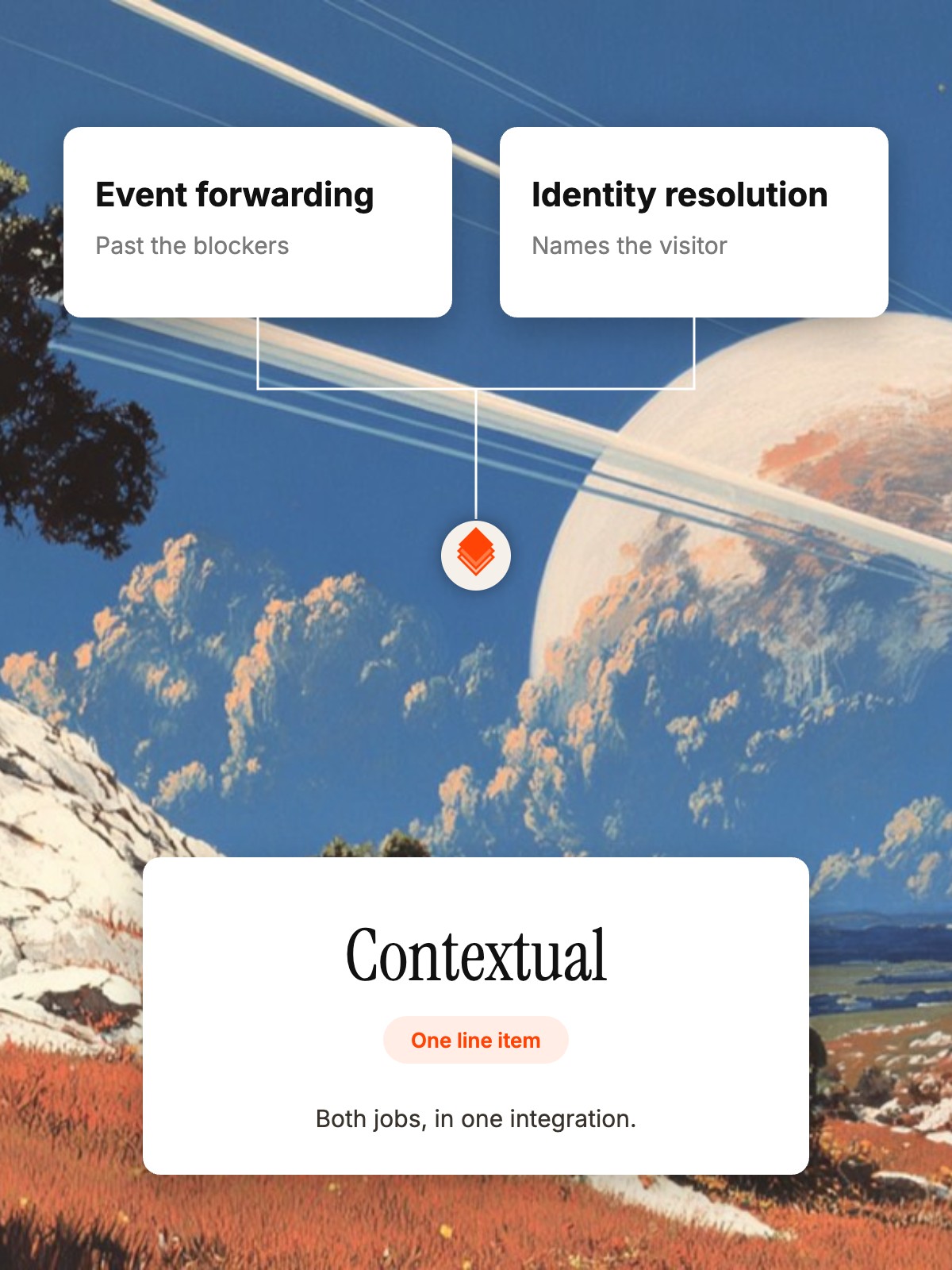
Event forwarding tools move your events server-side past the blockers, but they don't tell you who the anonymous visitor was. Identity tools do the opposite. Contextual does both jobs in one integration, including the server-side forwarding that lifts your Meta Event Match Quality score.
First-party by default
Contextual runs on a subdomain of your own domain, so a shopper who identified themselves stays recognized for a year, not seven days. Your own customer data accumulates instead of resetting to a third-party lookup every visit.
Incrementality you can audit
Contextual's flows are suppressed for anyone your native flows would have caught. Open your Klaviyo flow list, filter to the Contextual flows, and read the revenue column. That number is incremental by construction, not by attribution model.
You control the reach
Subscribers always get their flow. For identified visitors who never subscribed, you decide how many go through — high-confidence only, or wide open. Most tools are fixed at one end of that range; yours adjusts any time.