In this article
May 27, 2026
-
6 min read
The Dropshipping Returns Problem: Why "Get a US Warehouse" Isn't the Only Answer

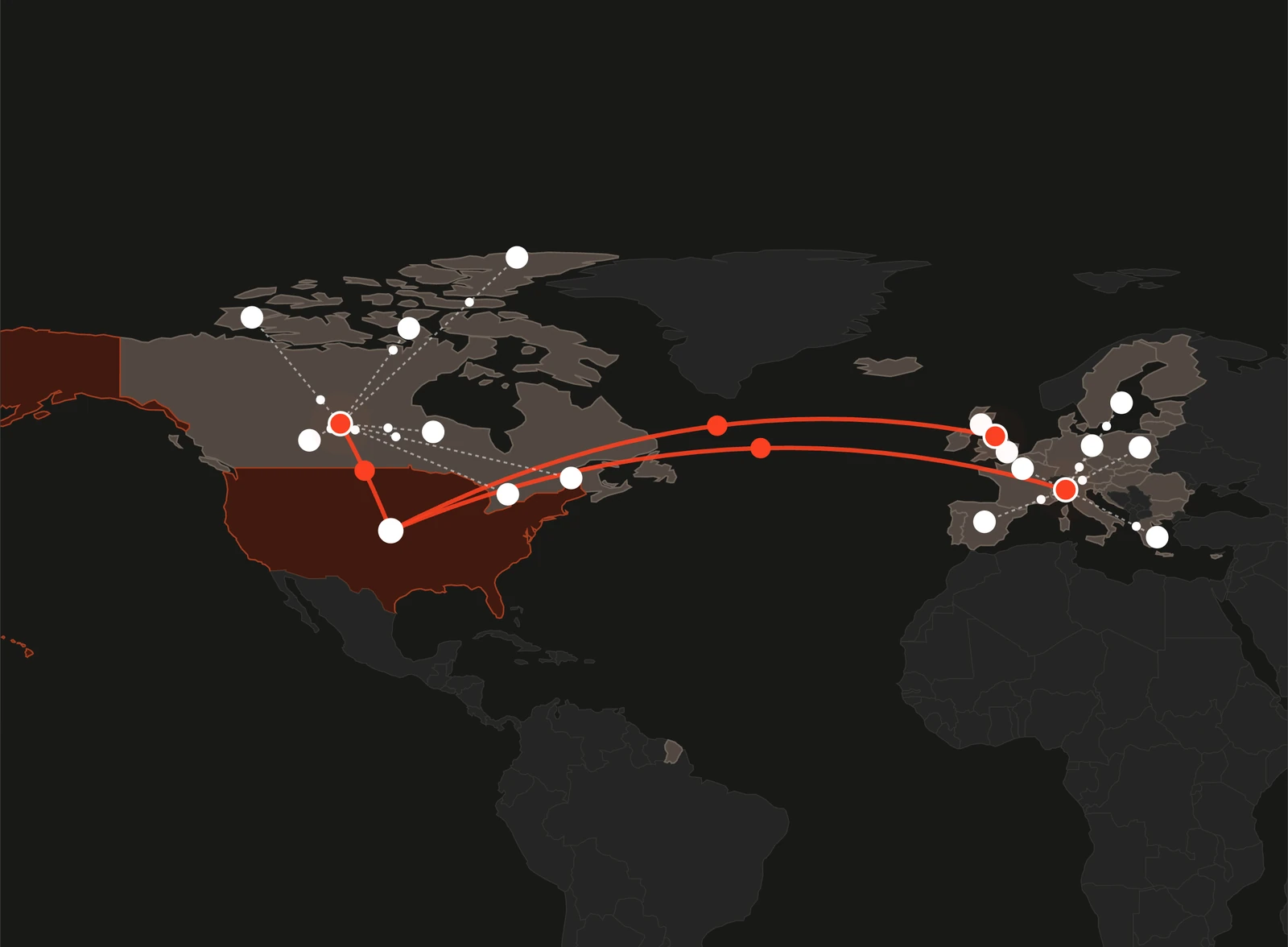
Every dropshipper hits the same wall eventually. The store is running. Orders are flowing. Margins look healthy on the spreadsheet. Then the first return request comes in, and you realize you have no idea where to send it.
Your 3PL agent in Shenzhen won't accept returns. Shipping the item back to China costs more than the order was worth. The customer is waiting. And the answer you keep getting from every forum, every agent, and every "scale your store" guru is the same: get a warehouse in the US.
That advice isn't wrong, exactly. But it's incomplete, and for most dropshippers it's the wrong problem to solve first. Standing up a US warehouse is a multi-month commitment, requires inventory pre-positioning, and locks up working capital you probably don't have yet. Meanwhile, returns are piling up today.
There's a better way to think about this, and it starts with separating the two distinct problems hiding inside "I need a return address."
The two problems dropshippers conflate
When you can't process returns, you're actually facing two separate questions:
1. Should this item even come back? Some returns aren't worth the freight. If your COGS is $4 and your return shipping is $12, you're losing money twice by requiring the item back. The shopper is unhappy, the inventory isn't going to resell at full price anyway, and you've doubled your loss. According to Shopify Enterprise's 2025 returns benchmark, the all-in cost of processing a single return runs $15 to $30 once labor, shipping, and inventory adjustments are factored. For most dropshipping SKUs, that number wipes out the order's margin twice over.
2. For the items that are worth recovering, where do they go? This is the warehouse question. But it's only worth answering once you've already filtered out the items that should never have been shipped back in the first place.
Most dropshippers treat these as a single problem and try to solve them by building infrastructure. The smarter move is to solve the logistics question with an existing network, then layer policy rules on top to filter out the returns that shouldn't move at all. The deeper framing on this margin math sits in our analysis of how returns kill ecommerce margins. Let's take them in that order.
The logistics half: a return address in every country you ship to
Here's where the "get a US warehouse" advice falls apart. If you're a US-based dropshipper sourcing from China, sure, a US return address solves your US returns. But:
- What about Canadian customers? Returning to the US triggers a customs entry and duty exposure on a low-value item.
- What about UK and EU customers post-Brexit? A return crossing the Channel hits VAT, IOSS implications, and meaningful cross-border freight cost per parcel.
- What about Australia? Returning a parcel from Sydney to a US warehouse is often more expensive than the original order.
Most dropshippers selling internationally end up with the same broken pattern: either they refuse international returns entirely (and watch their reviews tank), or they eat the cross-border return freight and bleed margin on every single one.
This is what Redo's international returns network was built to solve.
How Borderless works
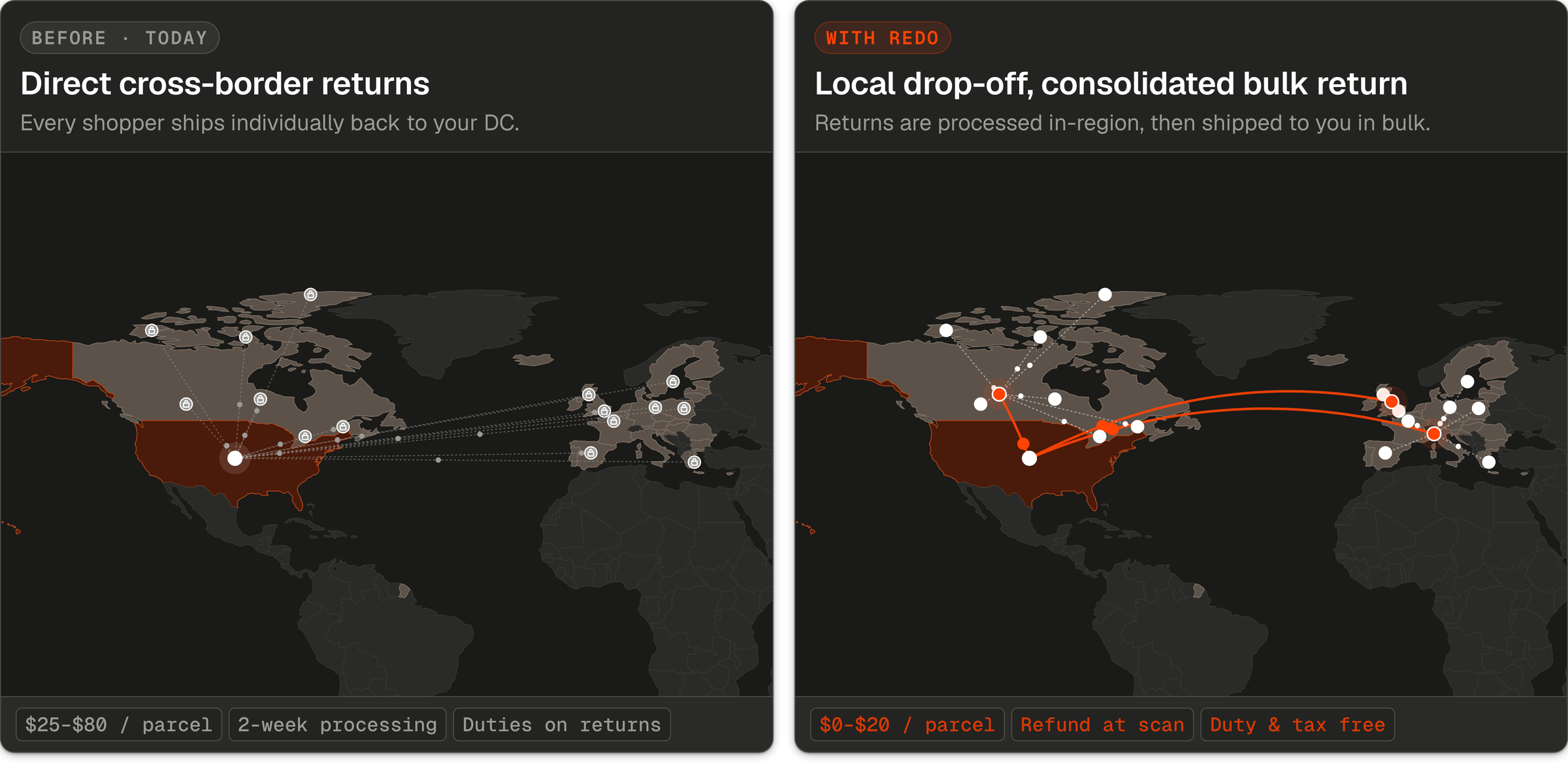
Borderless gives you in-country return addresses across five regions (United States, Canada, Netherlands, United Kingdom, and Australia) without you standing up your own warehouse, signing a new 3PL contract, or pre-positioning inventory.
When a shopper initiates a return, here's what happens:
- The portal generates a local return label. A Canadian customer gets a domestic Canadian carrier label to an in-country address. A UK customer gets a domestic UK carrier label to a UK address. The shopper drops the parcel at their nearest local carrier point: no customs forms, no international freight, no confusion.
- The parcel arrives at the regional hub. Our team receives the return at the in-country warehouse, scans it against the RMA, and inspects the item against the conditions you set.
- Grading and disposition happen based on your rules. Items can be graded as A (resellable, like-new), B (resellable with discount), or C (not resellable). You control the thresholds, the photo requirements, and what happens at each grade.
- Inventory is consolidated and routed based on your strategy. This is where it gets interesting. You don't have to ship every returned unit back to China. Resellable inventory can be held in-country and used to fulfill the next order in that market (skipping a full outbound leg from China entirely), consolidated with other returns and shipped back to your origin 3PL in bulk (drastically reducing per-unit reverse freight), resold locally through liquidation or B-stock channels, or disposed of if grading comes back as unsellable, with photo documentation.
- The shopper gets refunded, exchanged, or store-credited based on your policy, typically far faster than waiting on a transpacific return journey.
The consolidation piece is where the economics shift hardest. A single returned phone case shipped from London to Shenzhen costs more than the case is worth. The same phone case sitting in a UK hub, ready to fulfill the next UK order, saves you the outbound shipping from China. In the right scenarios, the return can effectively pay for itself by replacing the next order's outbound freight. The broader playbook on this kind of consolidation strategy lives in our reverse logistics guide, which covers the disposition decisions and consolidation patterns in more depth.
The policy half: when the math says "keep it"
Local hubs solve the logistics. But the best return is still the one that never has to move. That's the second half of the equation, and it's where Redo's rules engine comes in.
The industry term for "let the customer keep the item and refund them anyway" is a returnless refund (sometimes called a keep-it policy). It sounds counterintuitive (you're giving away inventory), but for the right SKUs and the right scenarios, it's often the highest-margin decision available.
Returnless refunds make sense when:
- Return shipping exceeds item value. A $9 phone case with $11 return shipping is a losing trade no matter how you slice it.
- The item won't resell. Damaged, opened consumables, intimate apparel, or anything where you'd grade it as "destroy" on arrival anyway. You're paying freight to throw it away.
- The item is low-COGS but high-CX-impact. Refunding a $6 item and keeping the customer is cheaper than paying $10 in freight to reclaim inventory you can't profitably resell.
- The return reason is clearly defective. If a customer is reporting a quality issue and the item is cheap enough that inspection costs more than replacement, just send a new one.
Where this gets powerful is when you don't have to make the call manually every time. Redo's returns platform lets you set return policies that automatically trigger keep-it decisions based on SKU value, return reason, customer history, photo evidence, or any combination of conditions. Item under $15 with a "defective" reason code? Auto-approve the refund, no return label. Item over $40? Route it to the nearest Borderless hub for inspection and reship. Customer flagged for return abuse? Different rules apply.
Layered on top of Borderless, this is the full picture: every return that should come back gets routed to a local hub for inspection, grading, and consolidation; every return that shouldn't come back gets auto-resolved without ever generating a shipping label. A common refrain in dropshipping forums sums it up well: be clear about your COGS. Don't require shipped returns on items that won't resell or are really cheap. That's exactly the call your rules engine should be making for you.
What "established" looks like
If you're past your first month of orders and looking at this seriously, the questions you should be asking aren't "do I need a US warehouse" but rather:
- What percentage of my SKUs should never come back as physical returns? (Set returnless refund rules.)
- Of the SKUs that should come back, where are my customers actually located? (That determines which Borderless hubs you need.)
- Of the inventory that comes back resellable, can I fulfill local demand from local returns? (That's the consolidation play.)
- What's my current reverse freight spend per return, and what would it look like if returns stayed in-country? (This is usually where the ROI conversation lands.)
The dropshippers who get this right aren't running fewer returns; they're running smarter ones. Returnless refunds on the items where the math demands it. Local return hubs for the items worth recovering. Consolidation and in-country reship for the inventory that can serve the next shopper. According to McKinsey's 2025 analysis of reverse logistics modernization, the brands that combine policy automation with consolidated regional processing convert returns from a cost line into a strategic capability. The combined effect is that returns stop being a tax on growth and start being a flywheel.
You don't need a warehouse. You need a system.
The advice to "get a US warehouse" is really shorthand for "you need to stop pretending returns aren't your problem." That part is true. But the warehouse itself is one of the most expensive, slowest, and least flexible ways to fix it.
A returns platform with country-level coverage, a rules engine that can trigger returnless refunds automatically, and a reverse logistics network that can consolidate or reship returned inventory is a modern answer. It works whether you're doing 70 orders a month or 7,000.
If you're a dropshipper running into the return-address wall, that's exactly the wall Redo Borderless was built to take down.
Ready to see what cross-border returns look like when they're solved end-to-end? Book a demo and we will walk through how Borderless, Redo's rules engine, and the regional hub network combine to turn your reverse logistics from a margin drag into a competitive advantage.
Key Insight
The dropshipper's returns problem isn't really a warehouse problem. It's two problems stacked: deciding which returns should physically move at all, and routing the ones that should move through a network already designed for cross-border reverse logistics. The brands that solve both layers (policy automation for the keep-it cases, country-level hubs and consolidation for the rest) turn returns from a tax on growth into a flywheel. The brands that solve only the warehouse half are still paying transpacific freight on inventory that shouldn't have moved in the first place.
About Redo
Redo helps ecommerce brands turn post-purchase moments into lasting relationships.
Use AI-powered return flows, exchange-first logic, instant credit, and analytics to understand not just what customers bought, but why they come back.