In this article
April 6, 2026
-
8 min read
How to Build an Ecommerce Return Policy That Boosts Conversions (+ Free Template)


Why Your Ecommerce Return Policy Shapes Conversions
Your ecommerce return policy is doing more work than you realize. Before a customer clicks "add to cart," many of them have already visited your returns page. According to Signifyd's 2026 Ecommerce Trends Report, 62% of shoppers say they would buy more from a brand based on a good return experience. Yet most brands treat their return policy as an afterthought, a legal formality tucked into a footer link.
That's a missed opportunity. A well-designed ecommerce return policy removes pre-purchase anxiety, nudges customers toward exchanges over refunds, and signals that your brand stands behind what it sells. A poorly designed one costs you customers before the sale even happens.
This guide covers what to include in your returns policy, the real cost tradeoffs brands face, how to use policy design to drive exchanges, and a sample return policy for ecommerce brands you can adapt today.
What a Strong Ecommerce Return Policy Must Cover
An effective ecommerce returns policy answers every question a customer might have before they decide to buy: and before they ever need to use it. The brands that get this right use clear, specific language rather than vague assurances. Here is what every policy needs.
Return window: How many days does a customer have to initiate a return after delivery? Thirty days is the baseline, but brands in apparel and footwear often extend to 60 or 90 days to reduce sizing anxiety. Whatever you choose, be explicit.
Eligible items: Be specific about exceptions. Final sale items, customized products, and hygiene-sensitive goods (swimwear, undergarments) typically carry different rules. Vague language here becomes a CS burden: every edge case that is not pre-answered becomes an email.
Condition requirements: Must items be unworn and in original packaging? Do you accept items with minor wear? If you are not specific, customers will test the limits and your team will spend time adjudicating.
Compensation options: This is where policy design directly shapes financial outcomes. Will you offer a full refund, store credit, or an exchange? Many high-performing brands now use a tiered approach: exchanges get a small bonus, store credit receives a slight premium, and cash refunds are available but not actively incentivized. Being explicit in your policy sets expectations and nudges customers toward the outcomes you prefer.
Return shipping: Do customers pay for the label, or do you cover it? If there is a fee, state the amount and when it applies. For international customers, does coverage differ? This single question creates more confusion than any other part of a return policy.
How to initiate a return: The process should fit in one sentence. "Start your return at [link] or through the link in your order confirmation email." If customers cannot immediately understand how to begin, they will contact your team instead.
The Real Cost Tradeoff in Ecommerce Return Policy Design
Designing a return policy is not just about words on a page. It is a financial decision, and two competing pressures make it genuinely difficult to get right.
The first is the Amazon effect. Free, no-questions-asked returns have set a baseline expectation for online shoppers. A luxury tabletop and accessories brand we work with described the tension directly: "Customers paying for return shipping labels creates friction compared to Amazon Prime expectations." That friction shows up not just when a customer tries to return something: it shows up before they buy, as quiet anxiety. What if the item does not work for me? What happens if I need to return it?
The second pressure is cost reality. Return shipping and processing can run $10 to $30 per transaction depending on item weight and carrier. At scale, those costs are significant.
High-end and luxury brands feel this tension acutely. A consolidated pattern we see repeatedly across premium DTC brands is a deep reluctance to charge customers for returns. Charging for returns can feel inconsistent with the brand experience they have worked hard to build. The solution most high-performing luxury brands land on: absorb the return shipping cost as a brand investment, but recover it upstream: either through a checkout opt-in model that lets customers pre-purchase return coverage, or by designing compensation tiers that make exchanges and store credit more attractive than cash refunds.
The Redo checkout opt-in widget gives brands a practical path here: customers can pre-pay a small fee at checkout for free returns and package protection, covering label costs without the brand absorbing them directly. Brands using this model have observed roughly a 3% lift in conversion, because pre-purchasing return coverage removes the pre-purchase anxiety at the moment of purchase.
The second underappreciated cost is process overhead. A musical instruments and gear brand described it plainly: "Manual returns process requires back-and-forth email and phone communication with customers." That back-and-forth is not just inconvenient: it is expensive. Every return handled via email is a CS ticket that could have been resolved through self-service.
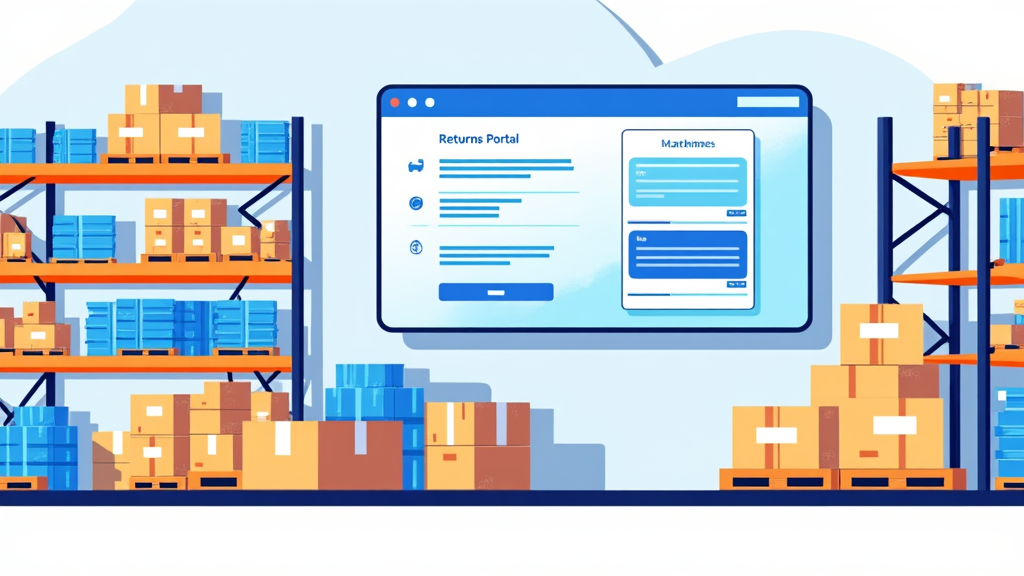
A B2B office goods merchant we work with had no digital return path for their online customers at all. "No self-service return portal for online customers" was the exact pain point they raised. When there is no portal, even the clearest return policy creates work, because customers have no way to act on it without contacting your team directly.
How to Use Your Ecommerce Return Policy to Drive Exchanges Over Refunds
One of the most underused levers in return policy design is the exchange incentive. Rather than treating refunds and exchanges as equivalent options, smart brands offer a small bonus for customers who choose to exchange. A customer who would receive $80 back might instead be offered $85 in exchange credit. The math usually works in the brand's favor: retaining a customer in an exchange preserves more lifetime value than processing a cash refund.
But exchange incentives require careful design to work as intended. When merchants started offering exchange bonuses, a new problem emerged: what happens when a customer does not spend the full bonus amount? On some platforms, the unused portion automatically converted to store credit, inadvertently giving customers unintended value and eroding margin. That is exactly why Redo shipped Prevent Unused Exchange Bonus from Carrying Over as Store Credit. Exchange bonuses are now voided if the customer does not use the full amount during their exchange, letting merchants offer incentives confidently without worrying about margin leakage.
For brands operating internationally, exchange policy gets more complex. If a UK customer wants to exchange a product and the merchant has separate US and EU warehouse inventory, which pool does the exchange draw from? The wrong answer leads to failed fulfillments and disappointed customers. Cross-Region Inventory Blocking for Exchanges solves this: merchants can now configure inventory filters so regional customers only see inventory that can actually be fulfilled to their location, eliminating a class of failed exchanges that had no clean workaround before.
Currency handling is another policy gap that shows up at scale. If your policy states a $10 return shipping fee, customers in Canada or the UK want to know exactly what that means in their local currency: not an estimate that shifts with exchange rates. Currency-Specific Fee/Bonus Settings in Return Portal lets merchants set return fees and exchange bonuses in exact local currencies. A merchant can now configure a $10 CAD return fee and know that Canadian shoppers see exactly $10 CAD every time, regardless of currency fluctuations.
Ecommerce Return Policy Template
Use the sample return policy for ecommerce below as a starting point. Customize the specifics for your product type, customer base, and operational setup. Every bracketed section is a decision point that should reflect your actual business rules.
[Brand Name] Return Policy
Return Window: Items may be returned within [30/60/90] days of delivery.
Eligible Items: Most items are eligible for return in their original, unused condition with tags attached. The following are final sale and cannot be returned: [customized items, final sale items, intimate apparel].
Item Condition: Items must be [unworn/unused/in original packaging]. We reserve the right to decline returns that do not meet these conditions.
Compensation Options: [Refund to original payment method / Store credit, optionally with a bonus / Exchange, optionally with a bonus]. Specify which options you offer and any bonus structure customers can expect.
Return Shipping: [Free returns via prepaid label / $X return shipping fee / Free for exchanges, $X for refunds]. International customers: [specify coverage or fee, and if you charge, name the exact local currency amount].
How to Return: Visit [link] or click "Start a Return" in your order confirmation email. You will receive a prepaid label or instructions within [timeframe].
Processing Time: Refunds and store credit are issued within [X business days] of receiving your return at our facility.
Questions? Reach our support team at [email or chat link].
A few notes on using this template effectively. First, make sure the compensation options in your written policy match exactly what customers see in your return portal. A mismatch between policy language and the actual return flow creates confusion and inbound tickets. Second, if you offer exchange bonuses, spell out how unused bonus amounts are handled. Third, review this policy at least twice a year: return patterns change, and a policy that made sense at launch may not reflect the realities of your current catalog or customer base.
Ecommerce Return Policy Customer Service Best Practices
The best ecommerce return policy customer service best practices share a common thread: they make the policy self-executing. Customers should be able to read the policy, start a return, and complete the process without ever contacting your team.
For brands scaling internationally, the complexity compounds: different return windows by region, different fee structures by currency, different carrier availability. The right platform makes this manageable, but it requires deliberate policy design up front rather than patching rules reactively as new markets surface new edge cases.
Ready to turn your return policy into a retention tool? Book a demo and see how Redo helps ecommerce brands design, automate, and optimize their returns experience without sacrificing margin or customer trust.
Key Insight
Your ecommerce return policy is not just a legal document: it is a conversion tool, a margin lever, and a brand signal. The brands that treat policy design seriously are the ones that turn returns into retained revenue rather than lost margin.
About Redo
Redo helps ecommerce brands turn post-purchase moments into lasting relationships.
Use AI-powered return flows, exchange-first logic, instant credit, and analytics to understand not just what customers bought, but why they come back.